The other day, I was standing in line at my local café, Mahtay Café & Lounge.

While the specifics of where I was aren’t necessarily important, I want to set the scene. So, I go in and stand in line. My back is to the big front window with a little seating area in front of it. This day was an especially nice one. It was mid-January, well above seasonal averages, and the sun was shining with a bright, glittery quality to it. One of the baristas came around to switch out the special’s menu from breakfast to lunch. It was then, as I turned around slightly to look at the offerings, that I saw it: someone taking a selfie in public.
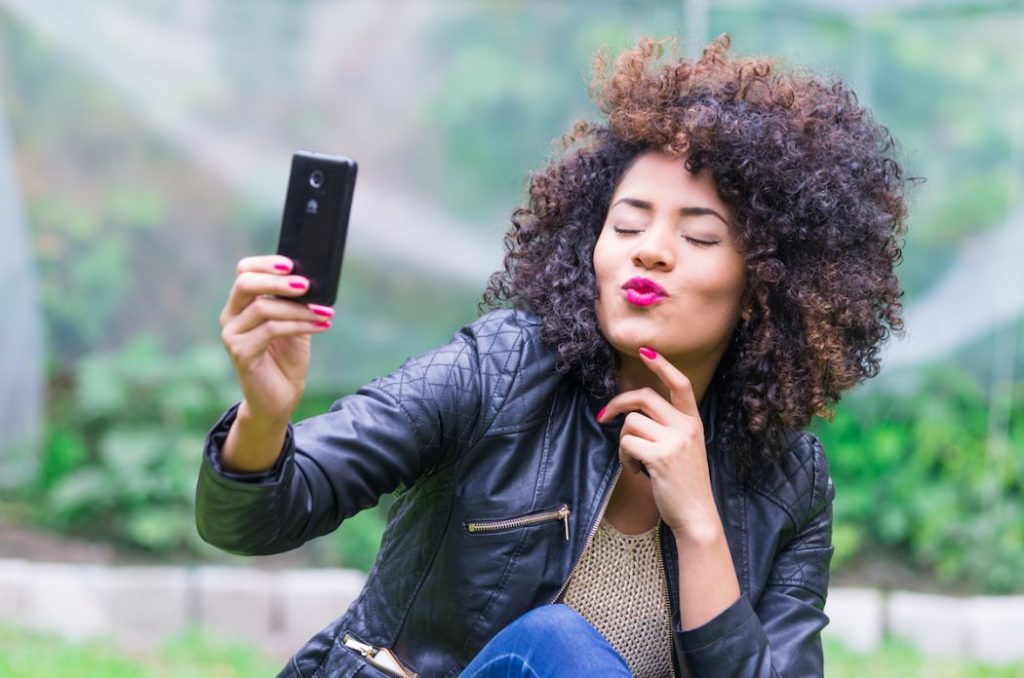
Don’t get me wrong. It’s certainly not the first time I’ve seen it, or done it, although I tend to lean towards bathroom selfies (they have the best light),

or selfies with the doggo

or the classic look where I am.
However, on this occasion the selfie-taker was really going for it. On top of the various poses, they were also changing the angle of their phone (up to the left, straight on etc.) and the level of their body (sitting, standing). There was a level of dedication to capturing THE right picture that was impressive. Aesthetically, I get it. That sun was giving me life (literally and figuratively), streaming through that window giving us backlit, ethereal glow realness.

But in the end, I was left feeling uncomfortable. Here I am, in a very public place, watching a behaviour that, while not obscene or intimate, makes me feel as though I’m intruding. The question is: why is it so weird to witness people taking selfies in public?
Interestingly, we can look to performance studies to tease out why this is so. In “The Presentation of the Self,” Erving Goffman uses the term performance to “refer to all activity of an individual which occurs during a period marked by his continuous presence before a particular set of observers,” (22). The front or the social front is the outward expression the individual uses to define the situation for the observers (22). This can be done intentionally or unintentionally. A standard part of the front is the setting which refers to the physical items such as décor that surround the individual. Additionally, Goffman uses the term “personal front” to refer to aspects or items that make up the performer, such as clothing, age, gender, race, facial expression, size, to name a few. He further breaks down personal front into appearance and manner.

Appearance refers to the stimuli which works to identify the performer’s social status, ritual state and/or the activity they are involved in, such as work or recreation (24).

And manner refers to the stimuli that warns of the performer’s upcoming interaction and the role the observer is expected to play in it (24).
So, what does this have to do with why it’s so weird to see people take selfie’s in public? Well setting, manner and appearance work together to create the social front of a performance. When these work consistently and coherently, the performance we witness will fall into a routine that we, as observers, are familiar with. While there is a certain amount of generalization (a tendency of humanity), this helps to prepare for the upcoming interaction.


In the case of selfie taking, there are inconsistencies in the setting, manner and appearance. The performer shifts the setting so that it now encompasses only that which is captured by the phone’s lens which may or may not include other performers/observers. Due to this shift in setting, the manner of the performer changes as well. There is no longer any indication to the observer about the potential interaction because it has been cut off by the performer. Instead the performer engages in activity in a manner that would suggest they are alone. But the observer isn’t negated simply because the performer doesn’t acknowledge them. We don’t disappear.
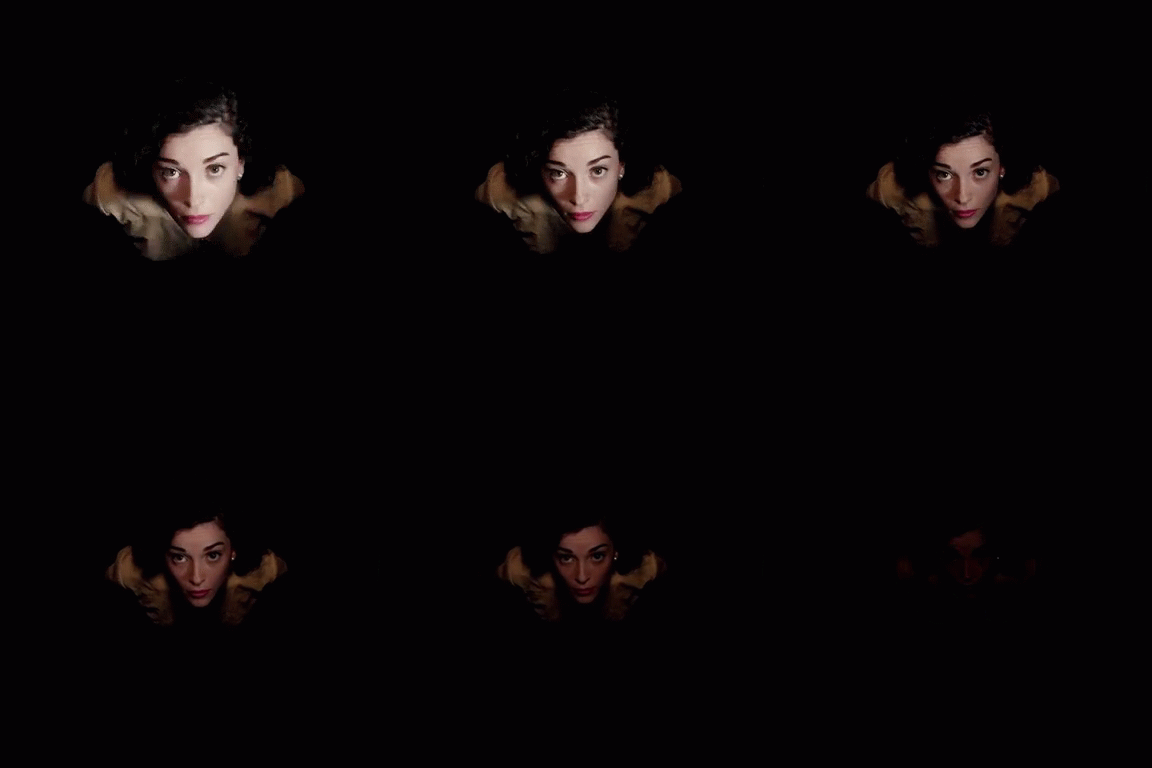
The short answer is: It’s an act of alienation. In engaging in a social front for a different audience, in this case social media, the performer makes their physical observers aware of and complicit in their online social front. And yeah, it’s weird. Maybe one day we will develop social etiquette that governs how we take selfies, or the proper way to behave and feel when we witness people taking selfies. Until then, no offence, I don’t want to be made complicit in whatever world you are living in online.
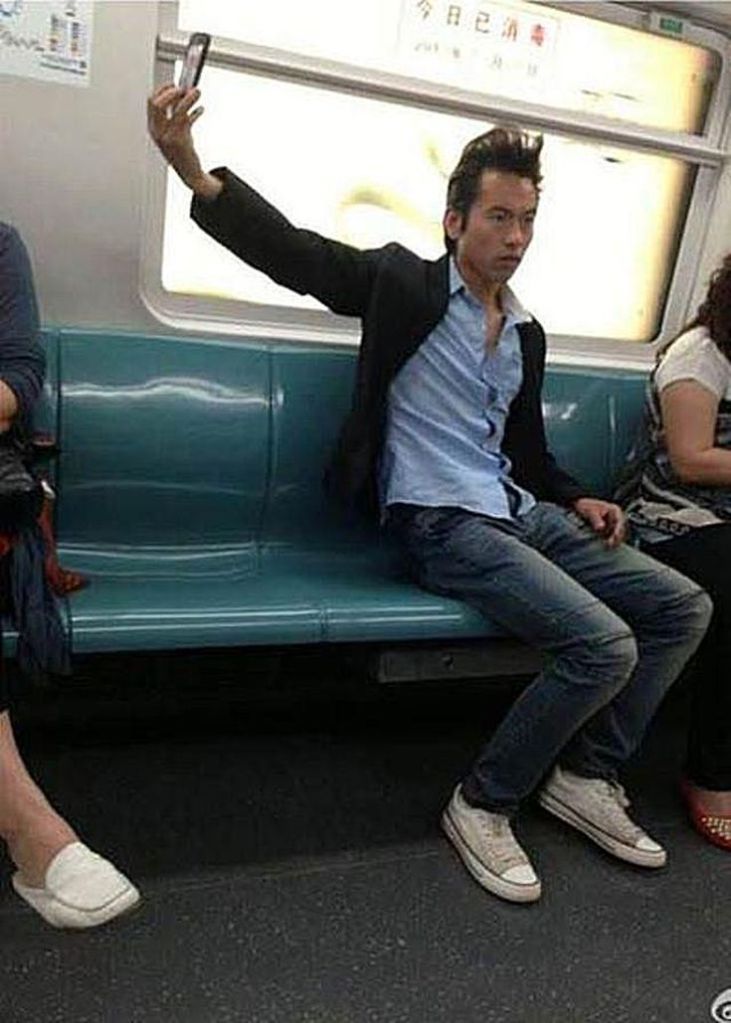
Works Cited
Goffman, Erving. The Presentation of Self in Everyday Life. Univ. of Edingburgh, 1956.
http://cniagara.ca/venues/details/mahtay-cafe
https://toofab.com/2017/10/23/kris-jenner-kim-kardashian-blonde-viral-photo-twitter-reaction/
https://en.dopl3r.com/memes/dank/current-mood/201697
https://tenor.com/search/do-you-know-who-i-am-gifs
Generation-Z Has A New Name For Generation-X: The Karen Generation
https://www.liveabout.com/people-caught-taking-ridiculous-selfies-1924637
 Life in Theatre. Theatre in Life.